About Alexander Technique
An easy and practical body–mind approach to healthier movement, breathing, and reducing stress and pain.
Alexander Technique is a gentle, practical, and educational method for improving how you move, sit, stand, breathe, and respond to stress, pain, and the demands of everyday life.
Rather than focusing on fixing symptoms or strengthening muscles in isolation, Alexander Technique helps you recognise and change habitual patterns of tension and effort that interfere with natural coordination. Over time, this can support reduced pain, improved posture and balance, calmer nervous system responses, and greater success and confidence in movement.
Alexander Technique is suitable for people of all ages and backgrounds, and can be learned through private lessons, group classes, workshops, and online.
A whole-person approach: body, mind, and nervous system
How you move is shaped not only by your anatomy, but also by attention, thinking habits, emotional responses, and past experiences.
Many people develop unconscious patterns of holding or bracing in response to stress, injury, pain, or performance pressure. These patterns can continue and persist long after the original cause has passed. This can contribute to ongoing discomfort, fatigue, or even reduced mobility.
Alexander Technique works at the intersection of movement, awareness, and nervous system regulation. By learning to notice and gently interrupt unhelpful habits, you can restore more efficient coordination and support a calmer, more adaptable response to everyday demands — without forcing change, countless exercises or “trying harder”.
How to benefit from Alexander Technique
Alexander Technique is typically and strategically taught experientially, through guided exploration and understanding of everyday activities.
Learning may take place through:
Private lessons, offering individualised support and application to personal goals
Group classes, where shared exploration deepens understanding and reinforces skills
Workshops and short courses, focusing on specific themes or contexts
Online or live-streamed lessons, supporting continuity and access
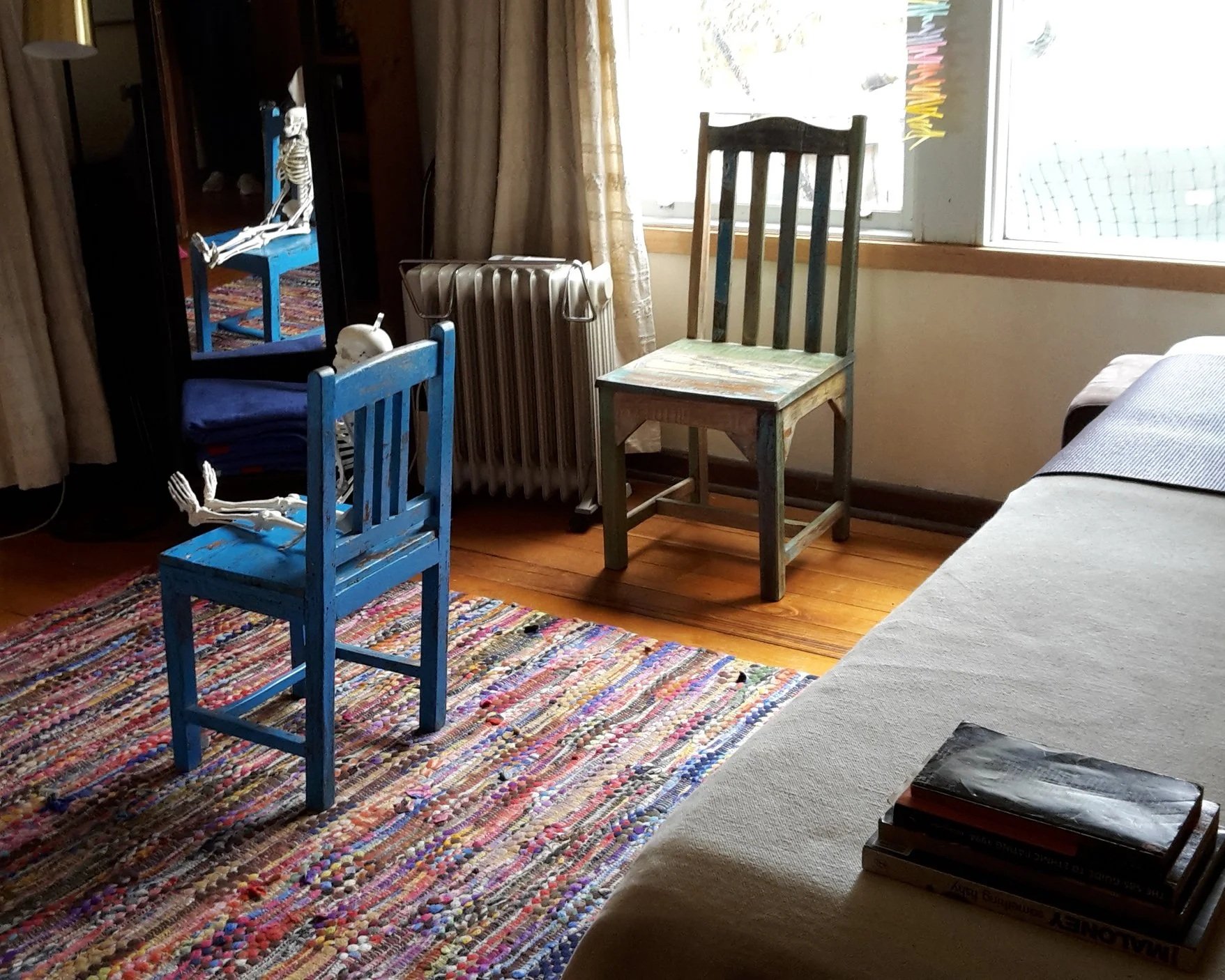
Sessions often involve simple movements such as sitting and standing, walking, or working at a desk, along with guided hands-on work and clear explanations. A model skeleton may be used to clarify how the body is designed to support itself.
Rather than being asked to correct posture or perform exercises, people learn how to:
Recognise unhelpful habits as they arise
Pause before reacting automatically
Allow more balanced support through the whole body.
These life-changing skills are practical and transferable to daily life, work, exercise, and performance.
Not treatment — practical
education for day-to-day life
Alexander Technique does not diagnose or treat medical conditions. It is a form of body–mind education that can complement medical care, physiotherapy, psychology, or exercise programs.
Because the skills are learned rather than applied to the person, individuals become active participants in their own well-being. Over time, they develop tools they can use independently, in real-world situations.
Alexander Technique benefits
-Manage persistent pain or tension.
-Improve posture, balance, and coordination.
-Support stress regulation and emotional resilience.
-Enhance breathing, voice, or performance.
-Maintain mobility and confidence in aging.
-Apply principles to exercise or rehabilitation programs.
-Navigate periods of change, such as injury recovery or perimenopause
You may arrive with a clear concern, or you are simply curious about moving and living with more ease.
Learning with Cathy Dowden
Alexander Technique lessons with Cathy Dowden reflect a calm, respectful, and collaborative approach, informed by her background in social work and long-term teaching practice and experience.
Cathy’s work emphasises safety, clarity, and practical application, and aligns with the seven focus areas explored on this site — including pain management, stress and anxiety, posture, balance, ageing well, performance, and workplace wellbeing.
How to benefit
People often begin with an initial private lesson or an introductory workshop to experience how this approach applies to their own circumstances.
Free introductory sessions, group classes, and private lessons are available in northern Melbourne.
Many people find a combination of private and group learning especially effective.
→ Contact Cathy to ask a question or book a session