Ageing well
Ageing well needs a whole-person approach
As we grow older, the way we move, think, feel, and respond to everyday challenges has a profound impact on our health and wellbeing.
Over decades, our bodies and minds adapt to life as it happens—work demands, caregiving, stress, injury, uncertainty, loss, and change. These adaptations are often intelligent responses at the time. Over years, even if no longer needed, they can become habitual, contributing to pain, stiffness, reduced balance, fatigue, or even a gradual loss of confidence in movement.
Ageing well is not about undoing the past. It’s about learning how to meet the present with a new awareness, greater ease, and wise decisions.
More than posture or exercise
Ageing well is not about “sitting up straight,” pushing harder, or doing more exercises.
Modern understanding of movement and health recognises that posture, balance, pain, and coordination are shaped by a combination of:
-Movement habits and biomechanics
-Nervous system regulation
-Thinking patterns and emotional responses
-Stress load and life experience
Alexander Technique works with all of these together, offering a whole-person approach rather than focusing on isolated symptoms.
How Alexander Technique supports ageing well
Alexander Technique is a gentle, practical educational approach that helps people improve how they function in everyday life.
This work can help you to:
Manage ongoing or recurring pain by reducing unnecessary strain and habitual tension
Move with less effort and more confidence, supporting daily activities
Improve balance, posture, and coordination, helping reduce fall risk
Release long-held tension patterns linked to stress, unhealthy habits or past injury
Support calm, clarity, and adaptability, especially during periods of change and stress
Rather than adding new exercises, this work helps unlearn unhelpful habits and rediscover ease and healthier movement—at any age.
Mind, body, and lived experience
Movement patterns are never purely physical. The way we think, feel, and respond to challenges is reflected in our balance and how we stand, walk, and breathe.
Over time, stress, anxiety, pain experiences, or repeated life pressures can shape posture and coordination, often without conscious awareness. Alexander Technique helps people notice how they respond—physically and mentally—and offers practical ways to change unhealthy patterns that no longer serve them.
Many people experience not only improved comfort and mobility, but also a greater sense of steadiness, mental clarity, and ease in daily life.
“I feel more in tune with my body now. Every day movements are easier, and I feel more confident as I move through daily life.”
— Vera, Melbourne
Balance, posture, and trust in movement
Balance is not just a physical skill. It is closely linked to attention, confidence, and how safe movement feels.
When posture is organised efficiently and unnecessary tension is reduced, the body can respond more easily to change. As trust in balance improves, people often move with less bracing and hesitation—supporting coordination, stability, and confidence in everyday situations.
Life transitions, including perimenopause
Life transitions — including retirement, health changes, caring roles, or perimenopause — affect both physical comfort and emotional resilience.
Alexander Technique can be particularly supportive during life transitions when changes in hormones, sleep, mood, pain sensitivity, and stress tolerance can affect both physical comfort and emotional resilience.
Learning to regulate effort, reduce unnecessary tension, and support the nervous system can help people navigate these changes with greater steadiness and confidence.
Supporting exercise and strengthening programs
Private Alexander Technique lessons can be especially valuable alongside exercise or strengthening programs, including prescribed exercise for osteopenia or osteoporosis.
Rather than replacing exercise, this work helps ensure movement is:
-Well supported
-Coordinated and efficient
-Free from unnecessary strain or over-effort
This can improve the effectiveness of strengthening programs and support
confidence and consistency over time.
A gentle, respectful approach
Cathy Dowden’s teaching style is calm, strategically paced, and collaborative. Lessons are adapted to your needs, comfort level, whether you are sitting, standing, walking, or moving slowly. There is no pressure to push limits or “perform.” The focus stays on practical, accessible skills that support ease, safety, and confidence in daily life.
→ Read more about Cathy Dowden
Not therapy — practical support
Alexander Technique does not diagnose or treat medical conditions. It offers practical, body-based education that can complement medical care, physiotherapy, and other allied health support.
Many people find that improving how they move and respond physically helps them feel more capable, supported, and confident as they age.
This work supports calmer attention and adaptability during change.
All this work is underpinned by the principles of Alexander Technique.
→ Learn more about Alexander Technique

Group Classes for Over-50s
Alexander Technique group classes are available in northern Melbourne, during the day and evenings.
Alexander Technique benefits people who:
Want to stay active and independent
Experience pain, stiffness, or reduced mobility
Are concerned about balance or falls
Are recovering from injury, surgery, or illness
Wish to move with greater ease as they age
How to benefit
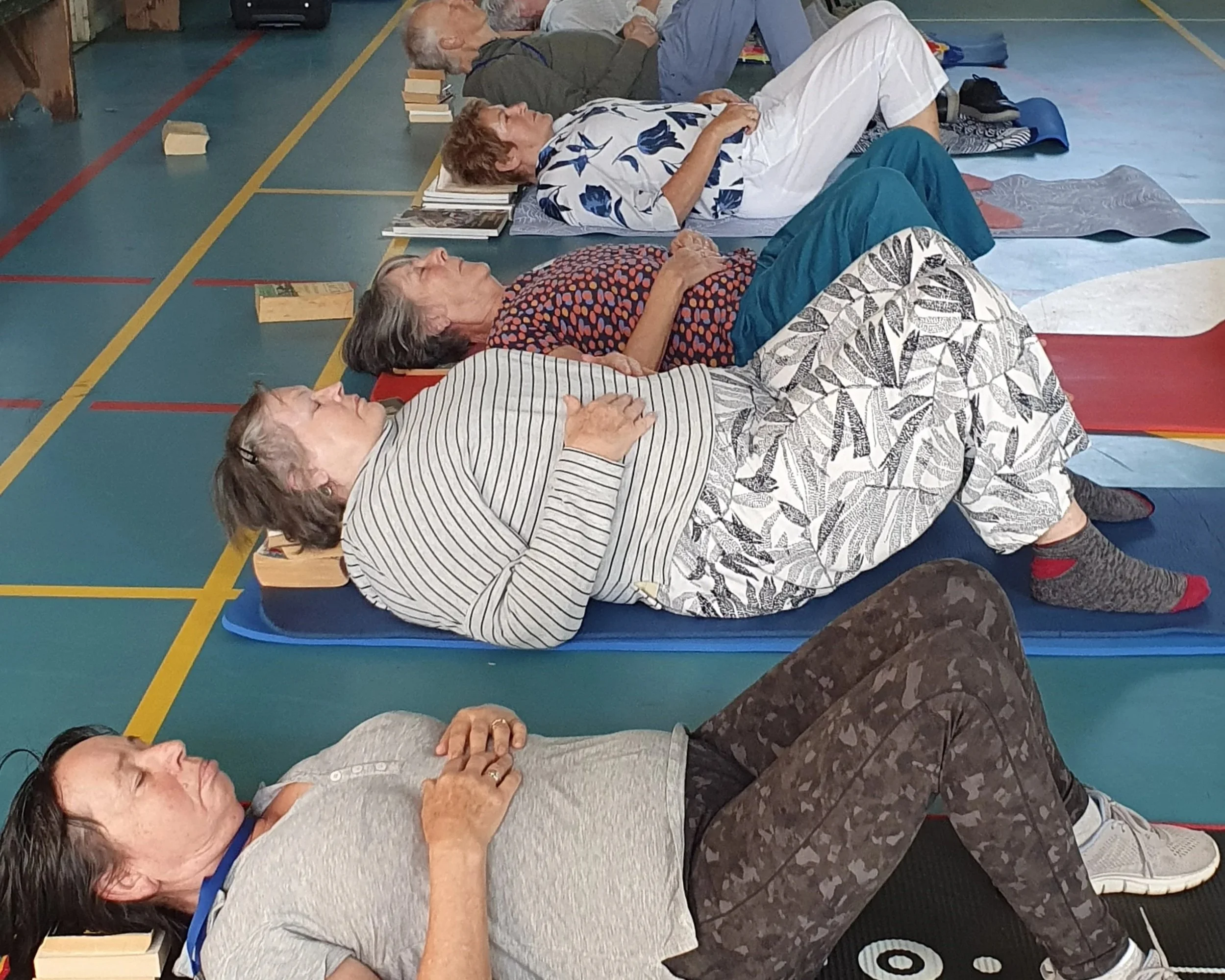
People often begin with an initial private lesson or an introductory workshop to experience how this approach applies to their own circumstances.
Free introductory sessions, group classes, and private lessons are available in northern Melbourne.
Many people find a combination of private and group learning especially effective.
→ Contact Cathy to ask a question or book a session