Sleeping Well
Sleeping Well with Alexander Technique
Sleep is essential for overall health, physical recovery, emotional regulation, and cognitive clarity. Yet many people struggle with falling asleep, staying asleep, or feeling tired even after sleep.
Sleep difficulties are rarely just about the body alone. They are influenced by stress, pain, habitual tension, breathing patterns, and how efficiently the nervous system can settle.
Alexander Technique offers a gentle, practical and effective way to identify and address these underlying contributors. This reveals and supports the conditions needed for deeper rest.

Why tension and stress affect sleep
Modern life trains many people to remain alert long after the day’s demands end. Not being aware of habitual muscular holding, mental overactivity, and unresolved stress can keep the nervous system in a heightened state — even when the body is lying down.
Common patterns include:
Neck, jaw, or shoulder tension in bed
Holding the breath or shallow breathing
Difficulty settling after busy days
Pain or discomfort that disrupts sleep
Alexander Technique lessons help people recognise and address these patterns. This can allow the body to settle more fully.

Nervous system regulation and rest
Quality rest depends on the nervous system’s ability to shift into a restorative ‘sleep’ state.
Alexander Technique supports this ability by:
Reducing unnecessary muscular effort
Improving breathing coordination
Encouraging a calm, attentive awareness rather than mental “switching off”
Teaching skills that can be used at bedtime or during night waking
Alexander Technique practices such as supported lying down (semi-supine) are often introduced, offering a reliable way to rest the system and release accumulated tension.
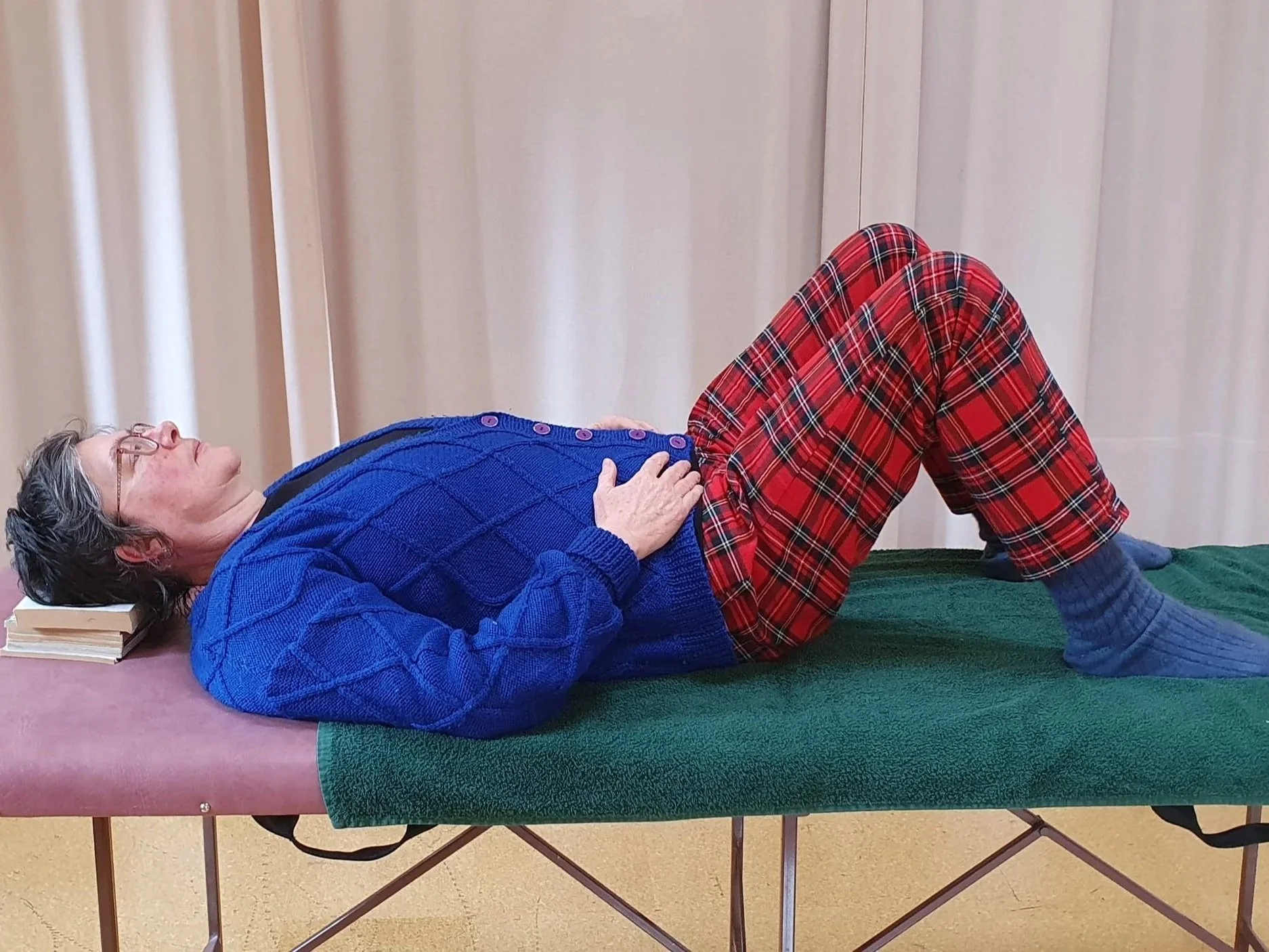
Pain, comfort, and sleep quality
Things like persistent pain, stiffness, discomfort or restricted movement can significantly interfere with sleep — particularly with ageing, injury history, or stress.
By improving overall posture and movement habits during the day, Alexander Technique lessons can help reduce night-time discomfort and support more comfortable rest and sleep positions.
This approach recognises pain as a whole-person experience, and how it is influenced by stress, habits, past experiences, and nervous system habits and sensitivity.
→ Read more about persistent pain

Applying skills beyond the lesson
One of the strengths of Alexander Technique is that it offers skills you can rely on independently and long-term.
Many people use what they learn:
at bedtime
during night waking
when changing position in bed
to reset after poor sleep
to support rest during the day
Over time, many people report improved comfort, ease, and confidence around rest.
“A revelation — the calming effects of supported lying down.”
— Colleen, Melbourne
A practical, complementary approach
Alexander Technique does not treat sleep disorders. It offers practical education that can complement medical care, psychological support, or sleep hygiene strategies.
All this work is underpinned by the principles of Alexander Technique.
→ Learn more about Alexander Technique
Suitable for people experiencing:
Difficulty falling or staying asleep
Waking with stiffness or pain
Stress-related sleep disruption
Sleep issues during life transitions (including perimenopause)
Feeling tired despite adequate time in bed

How to benefit
People often begin with an initial private lesson or an introductory workshop to experience how this approach applies to their individual sleep experience.
Private lessons, group classes, and workshops are available in northern Melbourne.
→ Contact Cathy to ask a question or book a session