Managing Pain
Understanding persistent pain
Pain is not only a signal of injury or tissue damage. Modern pain research and science shows that pain is shaped by how the brain interprets information from the body. This information includes our emotions, past experiences, and our current environment.
For many people, pain can persist even after physical healing has occurred. This happens when the nervous system remains in a heightened state of alert, continuing to protect the body as though danger is still present. Over time, this protective response can become habitual, contributing to ongoing pain and sensitivity.
Because of this, working with persistent pain requires a whole-person approach rather than focusing solely on where the injury was.

Pain, mobility, and everyday life
Ongoing pain often affects more than comfort. It can gradually reduce mobility, confidence, and quality of life.
Common experiences include:
Avoiding certain movements or activities
Stiffness or loss of range of motion, including shoulder restriction or “frozen” sensations
Pain that fluctuates with stress, fatigue, or emotional load
Disrupted sleep due to discomfort or tension
Increased caution or fear around movement
Over time, these patterns can reinforce pain by limiting movement options and increasing protective tension.

Pain as a learned and adaptable experience
Scientists now understand that pain is influenced by many interacting factors, including:
Stress and emotional load
Habitual movement and posture
Beliefs and expectations about pain
Past experiences of pain or trauma
Environmental and social context
This does not mean pain is “all in the mind.” All pain is real. However, it does mean that pain is changeable. By supporting the nervous system and changing unhelpful habits, it is possible to reduce the intensity and impact of persistent pain.
“After months of physio with little improvement, Cathy helped me change how I was walking. The pain started to fade and was gone not long after.”
— Bruce, Melbourne
How Alexander Technique can help manage pain.
Alexander Technique does not aim to diagnose or treat pain. Instead, it helps people gently unravel and change how they respond to pain and how they use their bodies in daily life. Both strongly affect - and are influenced by - the nervous system.
Alexander Technique lessons and body–mind coaching can help to:
Reduce unnecessary muscular tension that increases strain, discomfort and pain.
Improve posture and coordination, reducing load on sensitive areas
Support calmer nervous system responses, interrupting pain–stress cycles
Improve movement confidence, reducing fear-based guarding
Increase awareness of habits that exacerbate pain in daily activities
Enhance recovery post-injury or surgery, relearning movement without protective tension can support healing and prevent long-term compensation patterns that can cause pain.
Support self-management in day-to-day activities —during work, daily activities, and rest, etc.
Rather than trying to “fix” pain directly, people learn skills that support more adaptable, less effortful movement, which helps to reduce and manage pain.
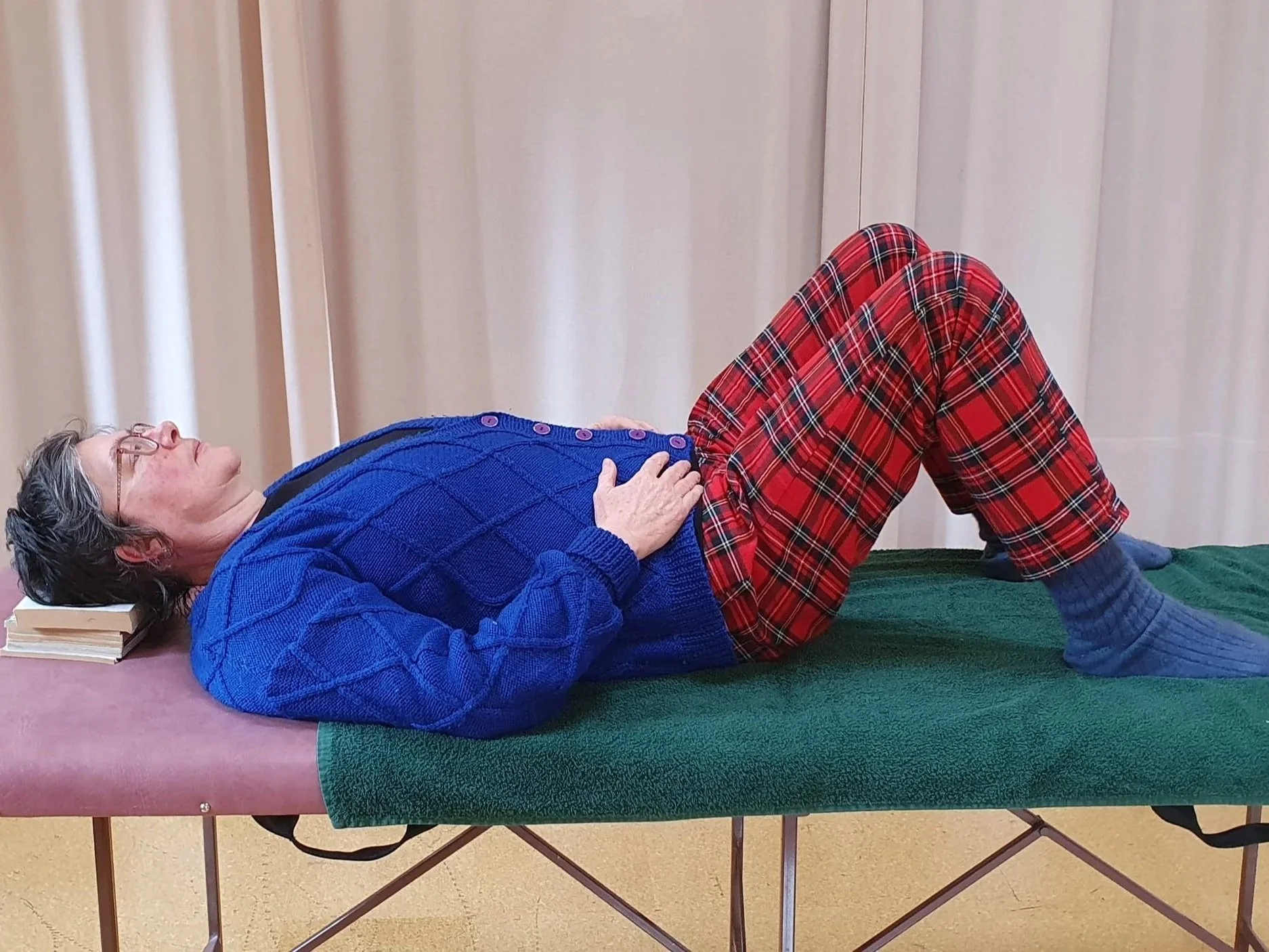
A gentle, respectful approach
Living with pain often involves frustration, uncertainty, and fatigue. Pushing through or forcing change without professional support can increase distress and sensitivity.
Cathy Dowden’s approach is calm, strategically paced, and collaborative. Lessons are adapted to each person’s needs and comfort, whether sitting, standing, or moving slowly. There is no requirement to push into pain or “fix” the body. The focus is on reducing unnecessary effort and supporting safety and ease.
Alexander Technique benefits people experiencing:
Persistent or recurrent pain
Pain associated with stress or anxiety
Long-term conditions or sensitivity
Pain influenced by past injury or trauma
Fear or uncertainty around movement
Evidence and application
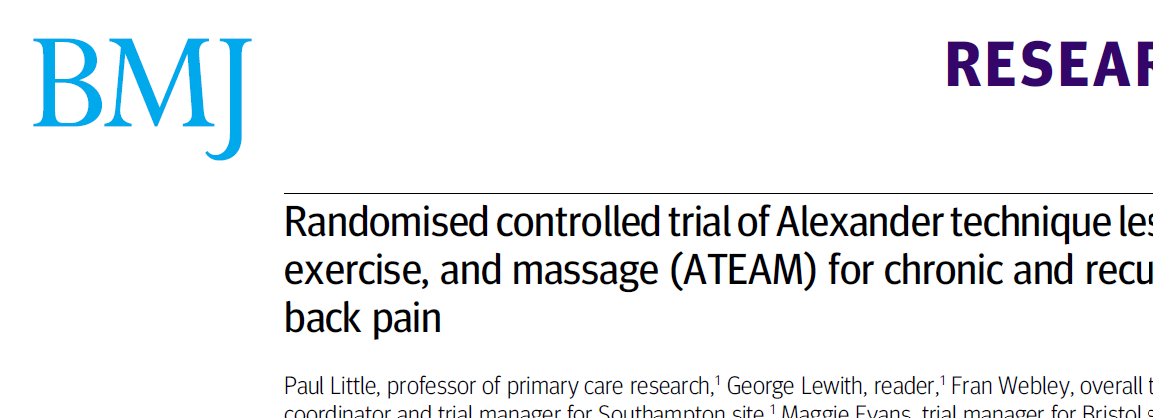
Published research supports the role of Alexander Technique lessons in managing certain pain conditions. A landmark study published in the BMJ (2008) found long-term benefits for people with chronic back pain following Alexander Technique lessons.
More broadly, pain science research supports approaches that address nervous system sensitivity, movement habits, and stress regulation alongside physical care, which is exactly what Alexander Technique does.
Movement, biomechanics, and awareness
Biomechanical factors remain an important and helpful part of pain management. Poor coordination, inefficient movement patterns, or habitual postural strain can contribute to ongoing and chronic pain, particularly in the neck, shoulders, back, and hips.
Alexander Technique lessons integrate biomechanical (the chemicals produced in our body) understanding with awareness and attention, which can help people to:
Move with better support from the whole body
Reduce unnecessary and overuse of the neck and shoulders
Distribute effort more evenly during everyday tasks
Apply principles to walking, sitting, lifting, and reaching
This approach supports movement without forcing positions or prescribing exercises.

Supporting sleep, rest, and recovery
Pain often interferes with rest and sleep, which can increase pain sensitivity. Learning to identify and reduce habitual tension and respond more calmly to discomfort can support:
-Greater ease when lying down or changing position
-Reduced holding or bracing at rest
-Improved capacity to settle and recover
Many people find that improved coordination and reduced effort positively affect both sleep quality and daytime energy.
→ Learn more about Sleeping Well
Empowering self-management
A key strength of Alexander Technique is that it equips people with skills they can use in day-to-day life — at home, at work, or during daily activities.
Rather than being a passive recipient of treatment, the individual learns how to influence their own experience of pain with greater awareness and choice.
This work can complement medical care, physiotherapy, psychology, and other pain management approaches.
The principles of Alexander Technique underpin all this work.
→ Learn more about Alexander Technique
Alexander Technique is not therapy — it is practical, supportive education.
Alexander Technique does not diagnose or treat medical conditions. It offers practical, non-invasive body-based education that supports ongoing pain management.
The skills learned through Alexander Technique lessons can be applied throughout daily life—while sitting, standing, walking, working, resting, or responding to discomfort etc.
Over time, these skills can support greater comfort, confidence, and adaptability, even if pain has been present for a long time.
How to benefit
People often begin with an initial private lesson or an introductory workshop to experience how this approach applies to their individual experiences of pain.
Private lessons, group classes, and workshops are available in northern Melbourne.
→ Contact Cathy to ask a question or book a session